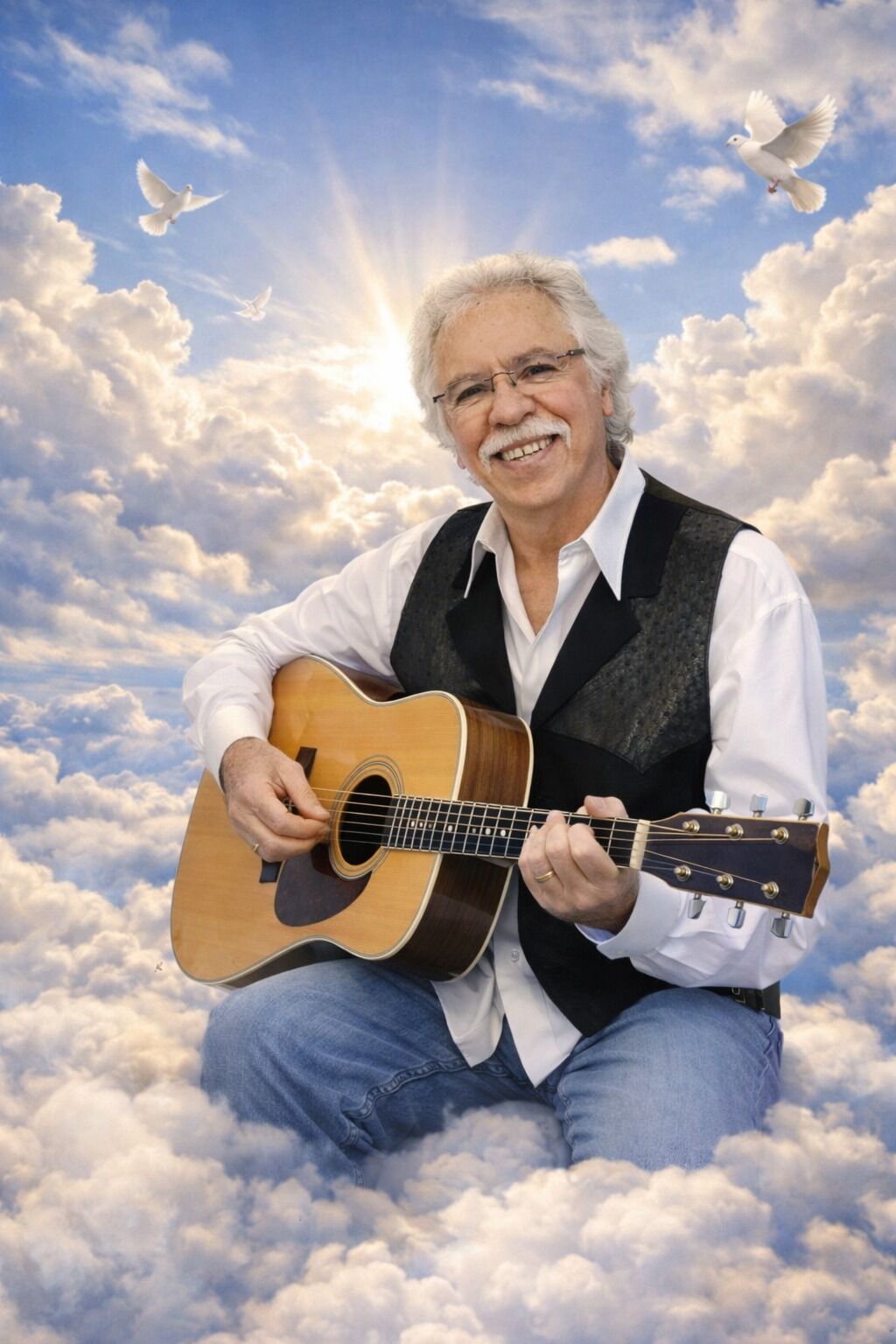
The Silver Voice of the Oaks: A Tribute to Joe Bonsall
In the grand tapestry of American music, few threads have remained as vibrant, consistent, and joyful as The Oak Ridge Boys. For over five decades, their four-part harmonies served as a bridge between gospel tradition and country superstardom. At the center of that sound—providing the energy, the high-tenor “sparkle,” and the infectious smile—was Joe Bonsall.
When Joe passed away in July 2024 at the age of 76 due to complications from ALS, the music world didn’t just lose a singer; it lost one of its most dedicated ambassadors of joy. Joe was the engine of the “Oaks,” a man whose Philadelphia roots and gospel heart combined to create a legacy that will echo as long as there is a harmony to be sung.
1. The Philadelphia Boy with a Gospel Soul
It is a common misconception that all country legends are born in the rural South. Joe Bonsall was born in Philadelphia in 1948, a city boy through and through. However, his soul was captured early on by the soaring harmonies of Southern Gospel.
As a teenager, Joe was obsessed with the vocal groups of the era. He didn’t want to be a solo star; he wanted to be part of a “blend.” After a stint with the Keystonians and the Talleys, his dream came true in 1973 when he was invited to join The Oak Ridge Boys. He replaced Willie Wynn, stepping into a group that was already transitioning from a traditional gospel quartet into something much larger. Joe’s arrival was the final piece of the “Golden Era” lineup: Duane Allen, William Lee Golden, Richard Sterban, and Joe Bonsall.
2. The High Tenor of “Elvira” and Beyond
If Richard Sterban’s bass provided the floor of the Oak Ridge Boys’ sound, Joe Bonsall’s tenor was the ceiling. He had a rare ability to hit the highest notes with a “ring” that cut through any arrangement without ever sounding strained.
Nowhere was this more evident than on their 1981 crossover smash, “Elvira.” While the song is famous for Richard’s “Giddy up, oom poppa mow mow” bass line, it was Joe’s energetic delivery and high-flying harmonies in the chorus that gave the song its pop-country infectiousness.
| Song Title | Joe’s Contribution | Impact |
| “Elvira” | High-energy tenor lead/harmony | Turned the group into global superstars. |
| “Thank God for Kids” | Tender, emotive delivery | Became a holiday and family staple. |
| “Leaving Louisiana in the Broad Daylight” | Driving, rhythmic vocals | Solidified their status as country-rock innovators. |
| “American Made” | Patriotic, upbeat lead | An anthem of 1980s Americana. |
3. The Energy Source of the Stage
To see Joe Bonsall perform was to see a man in his natural element. Even in his 70s, Joe possessed the kinetic energy of a man half his age. He was the “frontman” in spirit—the one who would bounce across the stage, engage the front row, and crack jokes that kept the show feeling intimate, no matter how large the arena.
He understood that music was a service. He often spoke about how “the boys” were there to make people forget their troubles for two hours. That sense of mission was what kept the lineup together for an unprecedented 50 years with virtually no changes—a feat unheard of in the volatile world of music groups.
4. A Man of Many Talents: The Author and Storyteller
Beyond the microphone, Joe was a prolific writer. He authored several books, including the “Giddy Up Euphrates” series and a deeply personal memoir about his parents’ service during World War II titled “G.I. Joe and Lillie.”
His writing reflected the same qualities as his singing: it was honest, patriotic, and centered on faith and family. He used his platform to celebrate the “Greatest Generation” and to share his love for his farm in Tennessee. Joe wasn’t just a singer who read lyrics; he was a storyteller who understood the weight and power of words.
5. Facing the Final Verse with Grace
The end of Joe’s journey was marked by a heartbreaking diagnosis of ALS (Amyotrophic Lateral Sclerosis). For a man whose life was defined by movement and a powerful voice, the physical toll of the disease was immense.
In early 2024, Joe made the difficult decision to retire from touring. In a characteristic display of humility and love for the group, he encouraged the Oaks to carry on without him, welcoming Ben James to fill his spot. Even as his body failed him, his spirit remained focused on the legacy of the “four-part blend.” He faced his illness with the same faith he had sung about for decades, never complaining, only expressing gratitude for the “greatest life a man could have.”
6. The Legacy of the “Oaks” Brotherhood
The bond between Joe and his bandmates—Duane, William Lee, and Richard—was more than a professional arrangement; it was a brotherhood. They prayed together, traveled millions of miles together, and stood by each other through the shifting tides of the music industry.
Joe’s passing felt like the end of an era, but as the remaining members have noted, Joe’s voice is baked into the DNA of the group. Every time an Oak Ridge Boys record plays, that high, clear, Philadelphia-born tenor is there, reminding us to “Thank God for Kids” and to find joy in the harmony.
7. Conclusion: The Song Goes On
Joe Bonsall once said, “I am a singer. I am a performer. I am a child of God. And I am a very lucky man.” We were the lucky ones. We got to witness a man who never took his talent for granted. Joe Bonsall didn’t just sing songs; he shared his heart. He taught us that you can be a superstar and still be a “regular guy,” that you can be a city boy and still be a country legend, and that the best way to live life is with a song on your lips and a smile for your neighbor.
As he joins the great celestial choir, we can almost hear that high tenor soaring above the rest. The Oak Ridge Boys will continue to sing, but there will always be a space on that stage—and in our hearts—that belongs solely to Joe.
“Rest well, Joe. The harmony is perfect now.”