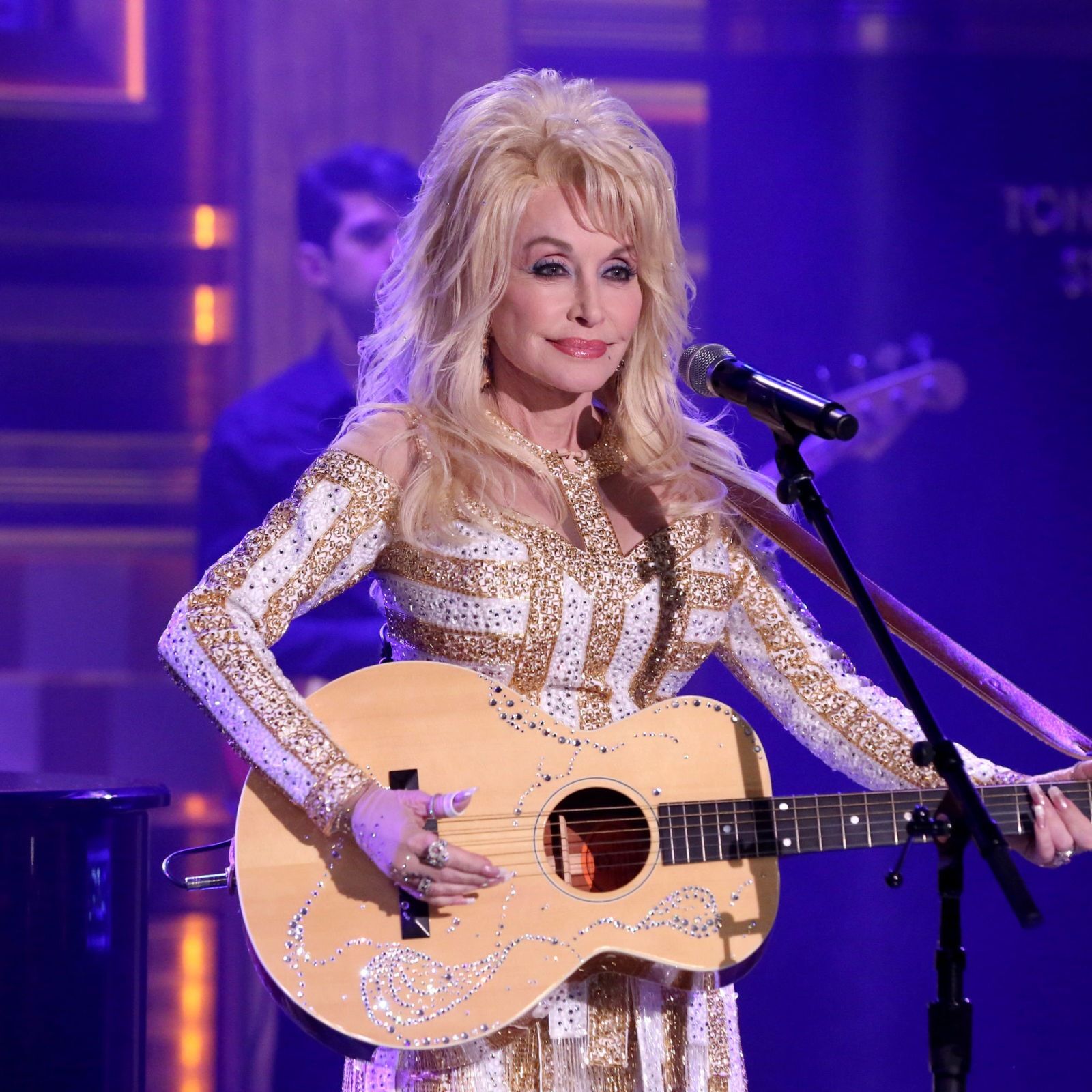
The Stories Behind the Sequins: 10 of Dolly Parton’s Best Songs
Dolly Parton is more than a country music icon; she is one of the world’s most prolific storytellers. With a catalog of over 3,000 songs, she has spent over six decades weaving the struggles of the working class, the ache of lost love, and the pride of her humble Appalachian roots into global anthems. Behind every rhinestone and every sky-high wig lies a sharp, poetic mind that has turned personal history into public legend.
Here are 10 of Dolly Parton’s most enduring songs and the fascinating stories that birthed them.
1. Coat of Many Colors (1971)
Widely considered Dolly’s personal favorite, this song is a true autobiographical account of her childhood in the Great Smoky Mountains.
-
The Story: Growing up as one of 12 children in a one-room cabin, money was nonexistent. Her mother, Avie Lee, sewed a coat for young Dolly out of a box of colorful rags given to the family. To keep Dolly from feeling ashamed of their poverty, her mother told her the biblical story of Joseph and his “coat of many colors.”
-
The Twist: Dolly wore the coat to school with pride, only to be mocked by her classmates. The song remains a powerful lesson that wealth has nothing to do with money and everything to do with love.
2. Jolene (1973)
This haunting track is perhaps the most famous “pleading” song in music history, but its inspiration came from two very different places.
-
The Name: Dolly met a beautiful, red-headed 8-year-old fan at a concert who asked for an autograph. When Dolly asked her name, the girl replied, “Jolene.” Dolly loved the sound so much she promised to write a song using it.
-
The Jealousy: The lyrics themselves were inspired by a red-headed bank clerk who took a “terrible crush” on Dolly’s husband, Carl Dean, shortly after they were married. Dolly joked that she wrote the song to get the feelings out of her system—and to remind the bank clerk that she was watching.
3. I Will Always Love You (1974)
Before Whitney Houston made it a global pop phenomenon, this was a quiet, heartbreaking country ballad written for a professional breakup.
-
The Story: In the late 60s, Dolly rose to fame as the “girl singer” on The Porter Wagoner Show. When she decided to leave to pursue a solo career, the partnership became strained and litigious.
-
The Goodbye: Realizing that words wouldn’t solve their impasse, Dolly wrote this song as a musical “resignation letter” to show Porter her gratitude and respect. When she sang it for him in his office, he cried and agreed to let her go, provided he could produce the record. Remarkably, she wrote this and “Jolene” on the very same day.
4. 9 to 5 (1980)
An anthem for the working class, this song is as famous for its “typewriter” rhythm as it is for its social commentary.
-
The Story: While filming the movie 9 to 5 with Jane Fonda and Lily Tomlin, Dolly wanted to write a theme song that captured the frustration of office life.
-
The “Instrument”: Lacking a guitar on set, Dolly used her long, acrylic fingernails to create a rhythmic “clacking” sound that mimicked a typewriter. If you listen closely to the studio recording, the credit for that specific percussion actually reads: “Nails by Dolly.”
5. My Tennessee Mountain Home (1973)
This song serves as the ultimate tribute to the peaceful, rural life Dolly left behind to chase stardom in Nashville.
-
The Story: The track is the center of a concept album about her childhood. The lyrics describe the simple sensory details of her upbringing: the “cricket’s call,” the “honeysuckle on the vine,” and the “walking home from church” on a dusty road. The cabin pictured on the album cover was the actual house where she grew up, reinforcing her lifelong commitment to her roots.
6. Islands in the Stream (1983) – with Kenny Rogers
This duet is a staple of karaoke bars worldwide, but it was almost a very different song.
-
The Story: Written by the Bee Gees, the song was originally intended for R&B legend Marvin Gaye. When Kenny Rogers first tried to record it, he hated it.
-
The Dolly Touch: Kenny told Barry Gibb that the song wasn’t working. Gibb suggested they “get Dolly.” As soon as she walked into the studio and added her high-harmony “sparkle,” the song transformed into a chart-topping pop-country masterpiece.
7. The Bargain Store (1975)
Though it sounds like a song about shopping, this is actually one of Dolly’s most poignant metaphors for emotional trauma.
-
The Story: Dolly compares her heart to a “bargain store” filled with “second-hand” goods that have been used and bruised by past lovers.
-
The Controversy: At the time of its release, some country radio stations banned the song because they misinterpreted the line “you can easily afford the price” as a reference to prostitution. In reality, it was a deeply personal song about being vulnerable after a heartbreak.
8. Here You Come Again (1977)
This was the song that officially “crossed” Dolly over from a country star to a mainstream pop icon.
-
The Story: Unlike most of her hits, Dolly didn’t write this one; it was penned by the legendary songwriting duo Barry Mann and Cynthia Weil.
-
The Strategy: Dolly was hesitant to record outside material, but she knew she needed a “pop” sound to reach a wider audience. She insisted on keeping a steel guitar in the arrangement so her country fans wouldn’t feel she had abandoned them. It worked—it became her first song to break the Top 10 on the Billboard Hot 100.
9. Love Is Like a Butterfly (1974)
The butterfly has become Dolly’s unofficial logo, appearing on her jewelry, her clothes, and even the logo for her theme park, Dollywood.
-
The Story: As a child, Dolly used to get lost in the woods chasing butterflies. She felt a kinship with them—fragile yet beautiful and free. This song cemented the butterfly as her personal symbol, representing her own transformation from a “mountain girl” into a global superstar.
10. Little Sparrow (2001)
Returning to her bluegrass roots in the 2000s, Dolly wrote this haunting, folk-inspired track about the fragility of life.
-
The Story: Dolly was inspired to write the lyrics after watching a tiny bird singing outside her window during a massive thunderstorm. She was struck by how the bird continued to sing despite the chaos around it. The song serves as a metaphor for the female experience—small and seemingly delicate, but possessing an iron-willed resilience.
Conclusion
Dolly Parton’s songs endure because they are built on a foundation of absolute honesty. Whether she is singing about a jealous wife, a ragged coat, or the “daily grind” of a corporate office, she speaks a universal language. Behind every one of these hits is a woman who never forgot where she came from, ensuring that her stories—and the people they represent—will never be forgotten.
“I’ve had to go through a lot to get where I am, but I wouldn’t trade any of it. My songs are my children, and I love them all for different reasons.” — Dolly Parton