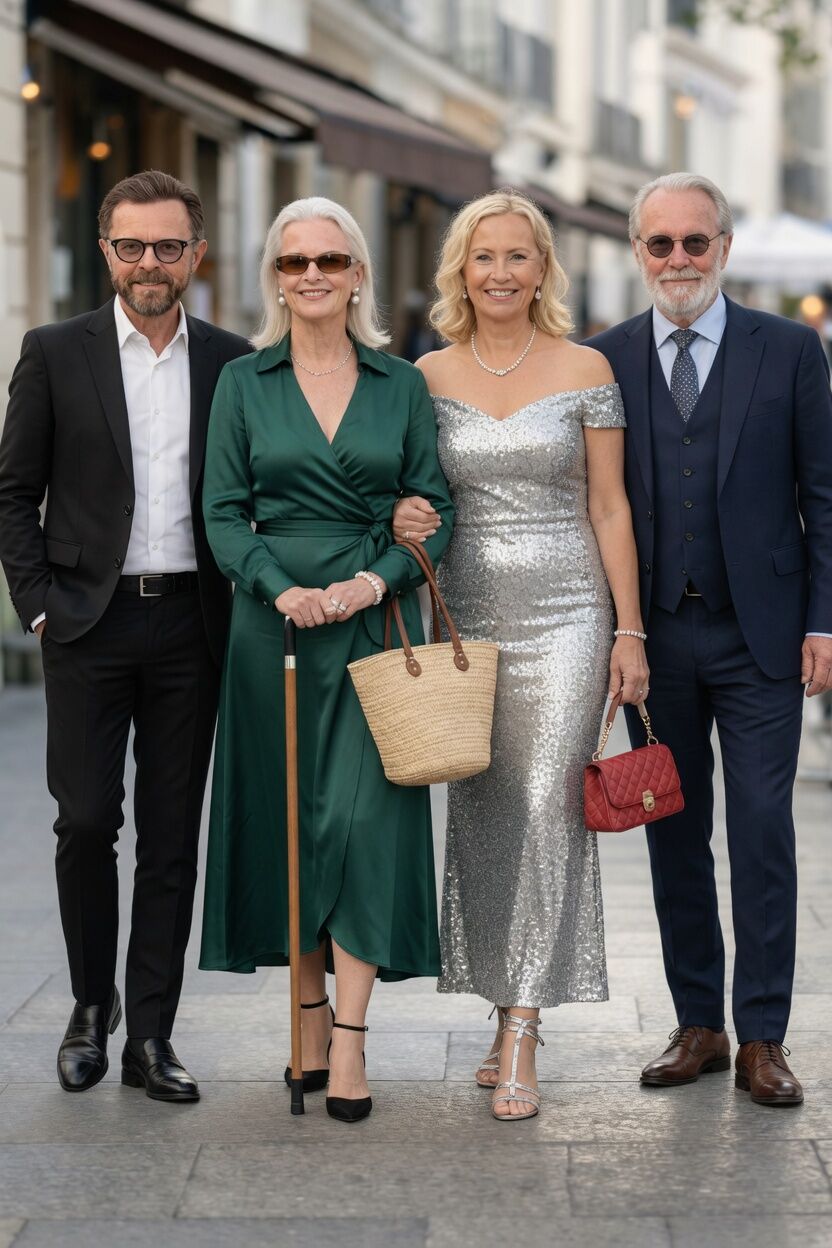
The Super Trouper Return: How ABBA Reclaimed the World After 40 Years
For four decades, the story of ABBA felt like a beautiful, finished book. The final pages were turned in 1982 when Agnetha Fältskog, Björn Ulvaeus, Benny Andersson, and Anni-Frid Lyngstad went their separate ways, leaving behind a legacy of shimmering pop perfection and a “temporary break” that lasted nearly half a century. But in the world of music, some harmonies are too powerful to stay silent. When ABBA announced their return with two brand-new songs, they didn’t just release music; they ignited a global cultural phenomenon that proved their “Golden Age” never truly ended.
1. The Silence That Spoke Volumes
To understand the impact of ABBA’s return, one must understand the depth of their absence. Following their unofficial split, the band members pursued solo careers and musical theater (most notably Chess), but they famously turned down a $1 billion offer to reunite for a tour in the year 2000.
They weren’t interested in being a nostalgia act. They wanted the legacy of Arrival, Voulez-Vous, and The Visitors to remain pristine. However, while the band stayed quiet, their music became louder. Through the Mamma Mia! stage musical and subsequent blockbuster films, a third generation of fans grew up dancing to “Dancing Queen,” ensuring that the Swedish quartet remained the heartbeat of pop culture.
2. The Grand Reveal: “I Still Have Faith In You” and “Don’t Shut Me Down”
In September 2021, the digital world stopped. ABBA announced Voyage, a brand-new studio album, and premiered two lead singles that showcased two distinct sides of the ABBA coin.
-
“I Still Have Faith In You”: A sweeping, emotional power ballad that serves as a direct letter to the fans and to each other. It asks the poignant question: “Do I have it in me?” As the song builds into a majestic orchestral crescendo, the answer is a resounding yes. It celebrates the “bittersweet” bond of four people who shared a unique, often turbulent journey through superstardom.
-
“Don’t Shut Me Down”: This track is classic ABBA “sad-disco.” It features a narrative-driven lyric about a woman returning to a former lover, wrapped in a sophisticated, driving pop arrangement. It felt modern yet timeless—a masterclass in songwriting that proved Benny and Björn hadn’t lost their Midas touch.
3. The “ABBAtars” and Technological Innovation
The return wasn’t just about the ears; it was about a revolutionary vision for the future of live performance. Alongside the music, the band announced the ABBA Voyage concert residency in London.
Rather than appearing as their current selves, the band collaborated with George Lucas’s Industrial Light & Magic to create digital “ABBAtars.” Using motion-capture technology, the four members (now in their 70s) performed their entire set in suits covered in sensors. This allowed the digital versions of their 1979 selves to perform every night in a purpose-built arena. This wasn’t a “hologram” in the traditional sense; it was a digital resurrection of their peak physical form, combined with the soul and movement of the living legends.
4. Why ABBA Still Matters: The Formula of Feeling
Why did the world react with such fervor? The secret lies in the unique “ABBA Formula”:
| Element | Description |
| Melodic Sophistication | Benny Andersson’s compositions often draw from Swedish folk and European classical music, making them more complex than standard 4-chord pop. |
| Lyric Depth | Björn Ulvaeus mastered the art of the “smiling through tears” lyric—happy music paired with devastatingly honest stories of divorce and aging. |
| Vocal Chemistry | The “third voice” created when Agnetha’s high soprano blends with Anni-Frid’s rich mezzo-soprano is an inimitable sonic signature. |
5. A Global Legacy Reborn
The release of the two songs sent ABBA back to the top of the charts in over a dozen countries. In the UK, Voyage became their 10th Number 1 album. In the United States, they achieved their highest-ever chart position on the Billboard 200.
But beyond the numbers, ABBA’s return represents a rare moment of pure, unadulterated joy in a cynical age. They reminded the world that “Pop” isn’t a dirty word—it is a craft. Their new music didn’t try to chase TikTok trends or mimic modern trap beats. Instead, they stayed true to themselves, offering a warm, sophisticated sound that felt like coming home.
6. The Final Bow?
Björn and Benny have hinted that Voyage is truly the end of the road. If this is the case, the two new songs and the subsequent album serve as the perfect epilogue. They have bridged the gap between the 20th and 21st centuries, proving that great songwriting is immortal.
“When you hear those voices again, it’s like no time has passed. The hair might be grayer, but the magic is still gold.”
Conclusion
ABBA’s return after 40 years is more than a comeback; it is a victory lap for one of the greatest musical entities in history. By releasing “I Still Have Faith In You” and “Don’t Shut Me Down,” they didn’t just recapture the charts—they recaptured our hearts. They proved that while we all grow older, the music that makes us dance, cry, and sing along at the top of our lungs is truly ageless. Thank you for the music, once again.